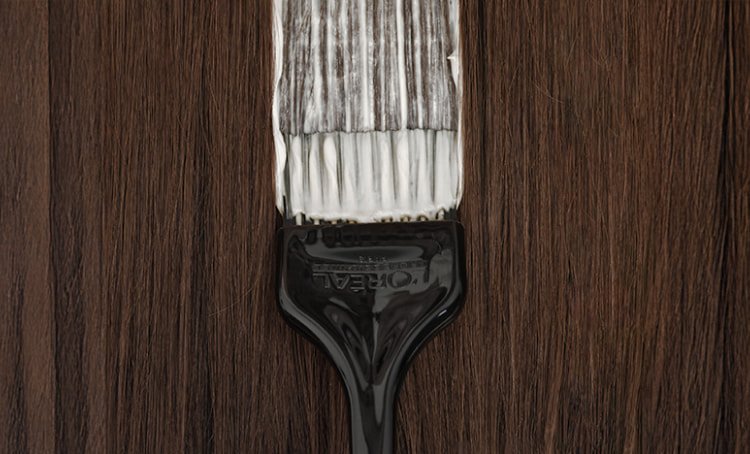
What is grey coverage?
Full grey coverage implies using permanent hair color or dye to completely cover your greys. This means uniform color, applying an even tone throughout the hair without any visible greys, for full grey concealment. With full grey coverage, you can choose from a wide range of colors and shades.
Who grey coverage is best for
Classic grey coverage is a more uniform opaque approach for those who don't want to see their greys. It is ideal to reach a consistent polished look.
Maintenance rhythm
Classic grey coverage does require more frequent touch-ups depending on the hair growth speed. You’re probably looking at touch-ups every 4 to 6 weeks to keep the roots covered and maintain that uniform, grey-free look.
Grey coverage products
For professional grey coverage, ask your salon professionals about Majirel by L’Oréal Professionnel to achieve rich uniform color from root to tip with up to 100% grey coverage, or the ammonia-free iNOA, the most innovative permanent color powered by oil.

What is grey blending?
Distinct from full grey coverage, grey blending takes a a more subtle approach, with a softer integration of greys into color. It’s also a bit more flexible and lower maintenance. Rather than aiming at complete concealment of greys, grey blending is all about attaining a natural, multi-dimensional look. Grey blending leads to a softer look with a more gradual grow-out.
Who grey blending is best for
Grey Blending is ideal for those who want to space up a little bit their appointments in salon and wish to have a less visible regrowth demarcation while maintaining a full coverage of their greys.
Grey blending techniques and products
There are various grey blending techniques. Highlights and lowlights softly incorporate greys into your natural color, adding some dimensionality. Balayage brings a contemporary, sun-kissed style. Demi-permanent or gloss coverage provides single-color coverage in a less permanent way than regular hair dye.
French BlendingTM by L’Oréal Professionnel is a new approach to grey coverage, pairing innovative color recipes with Vertical Weaving Technology for unrivaled natural-looking results that last. With French BlendingTM, you can achieve multi-dimensional color while lowering down maintenance and spacing out a little bit in-salon appointments.

Coverage vs. blending: key differences.
Still not sure which type of grey coverage you’re looking for? We’ve got some side-by-side comparisons you can explore, taking into account desired coverage results, maintenance rhythms, and the hair profiles suited to each.
Grey coverage vs. Grey blending
| Grey coverage | Grey blending | |
|---|---|---|
| Results | Solid color, full grey coverage; bold coverage | Soft integration of greys into color; natural look |
| Maintenance | Touch-ups every 4-6 weeks | Touch-ups every 6-8 weeks |
| Best hair profiles | A high percentage of greys, or looking to fully cover greys at any stage | A high percentage of greys, wishing to live better the waiting between color appointments. Ready to embrace a slightly lighter hair color. |
Recommended routine to support each option.
Whether you opt for full grey coverage or more subtle grey blending, there are ways you can help maintain your color choice. It’s about using the right products and setting up the right routines to nourish your hair and extend the life of your coverage.
Color care products
For colored or dyed hair, you always want to use color-safe shampoos and masks to extend the life of your treatment. These products are formulated to prolong the vibrant color result of your hair.
Shine maintenance
For any kind of color-treated hair, we recommend products that nourish and hydrate, to ensure and maintain shine. These can range from heat protectants, so you don’t dry out, damage or dull hair during styling, to products that nourish from deep within the hair fiber. The Metal Detox range – including a shampoo and mask – works from inside the hair fibers to neutralize the effects of accumulated metals in the water supply. By removing metal and mineral deposits from the hair, Metal Detox leads to less breakage after color treatments as well as more reliable color results, as well as shinier, softer colored hair.

Conclusion: Choosing the right option.
Whether you’re aiming for full grey coverage or a more blended and natural-looking approach, there’s a range of options. Talk to your salon professional today and ask about French BlendingTM.

Grey blending and grey coverage FAQ
What is the main difference between grey blending and grey coverage?
Grey coverage aims for full, bold coverage, while grey blending takes a more subtle and natural approach.
Which option is lower maintenance?
Grey blending is definitely the lower maintenance option, requiring touch-ups that are far less frequent.
What products are used for French Blending™?
The service relies on the entire L’Oréal Professionnel color portfolio, allowing colorists to combine reflects, depth, and lightness with precision for a fully customized result.
Your French Blending™ services to blend your greys gracefully.


Metal Detox Pre-Treatment Spray


First Blending service.